Rim refinishing

Stripped, treated, and refinished to match

We refinish alloy, aluminum and steel wheels at our Bedford, MA facility. Structural issues get flagged for repair before refinishing ever begins.

Curb rash — sanded and filled

Curb rash and scuffs

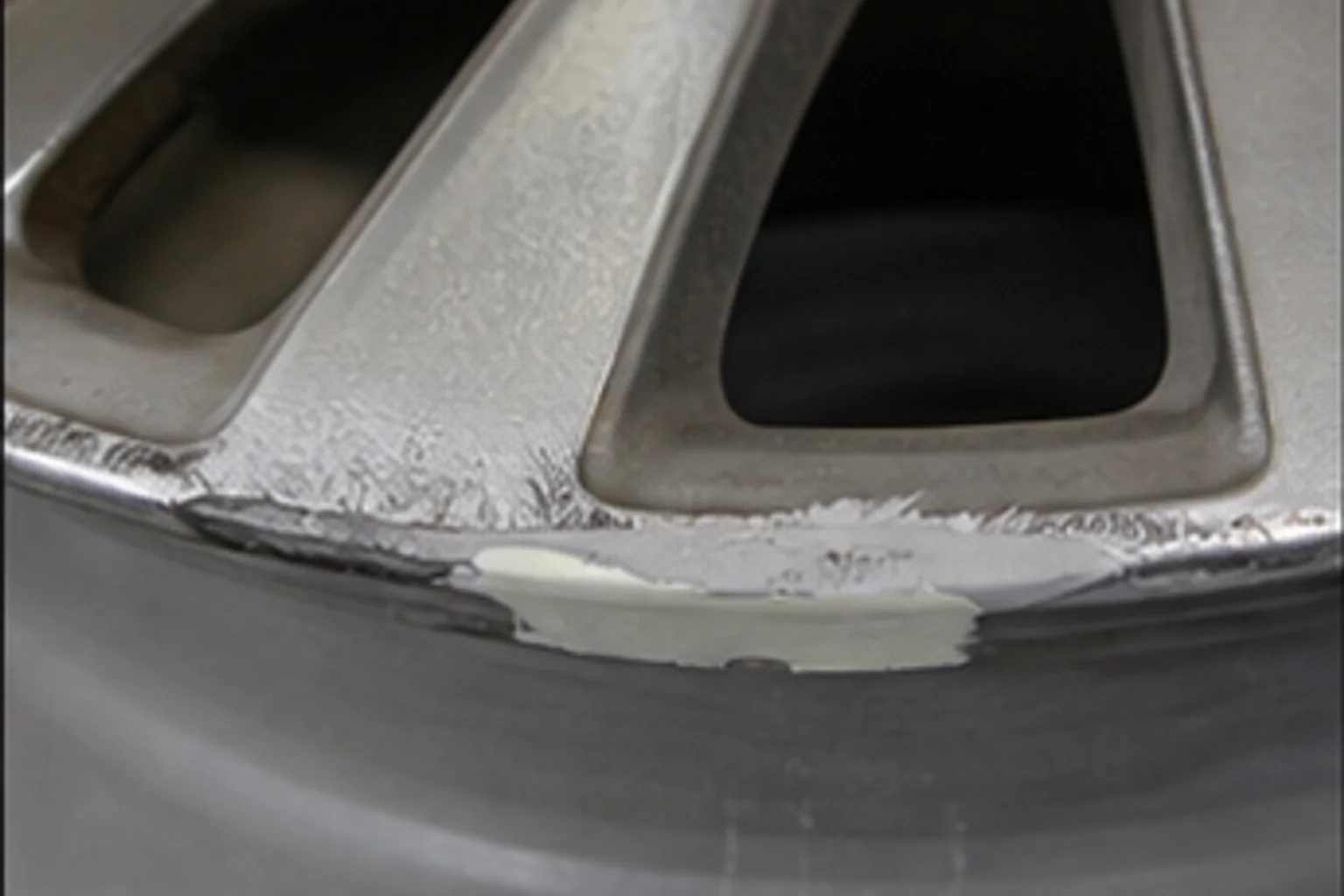
Curb rash is the most common refinishing request — contact with curbs, parking barriers and road edges grinds through the clear coat and base finish into the bare alloy. We sand, fill and refinish the damaged area to restore a smooth, consistent surface across the entire wheel face.

  • Most common refinishing request
  • Sanded, filled and refinished to match
  • Consistent surface across the full wheel face
Corrosion — bubbling clear coat

Corrosion and oxidation

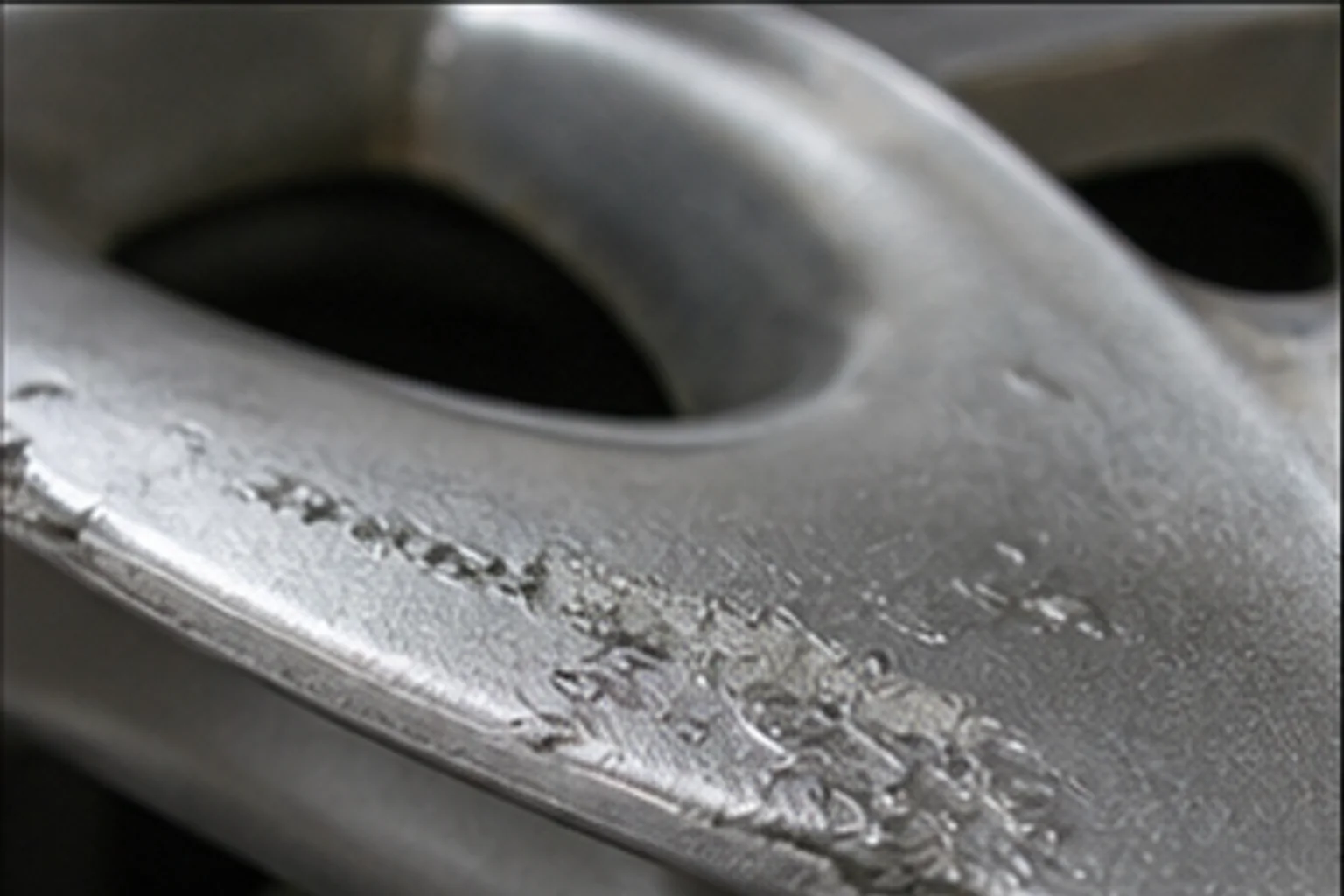
Road salt, brake dust and moisture cause alloy wheels to corrode beneath the clear coat. Massachusetts winters accelerate this — road salt application from November through March combined with freeze-thaw cycling breaks down factory finishes faster than in milder climates. Refinishing requires stripping the failed finish, treating the corroded alloy, and applying a new primer-based clear system.

  • Appears as bubbling, flaking or white powdery spots
  • Accelerated by Nov–Mar road salt and freeze-thaw
  • Stripped, treated, and re-primed before refinishing
Diamond-cut lathe finish

Machined and diamond-cut wheel damage

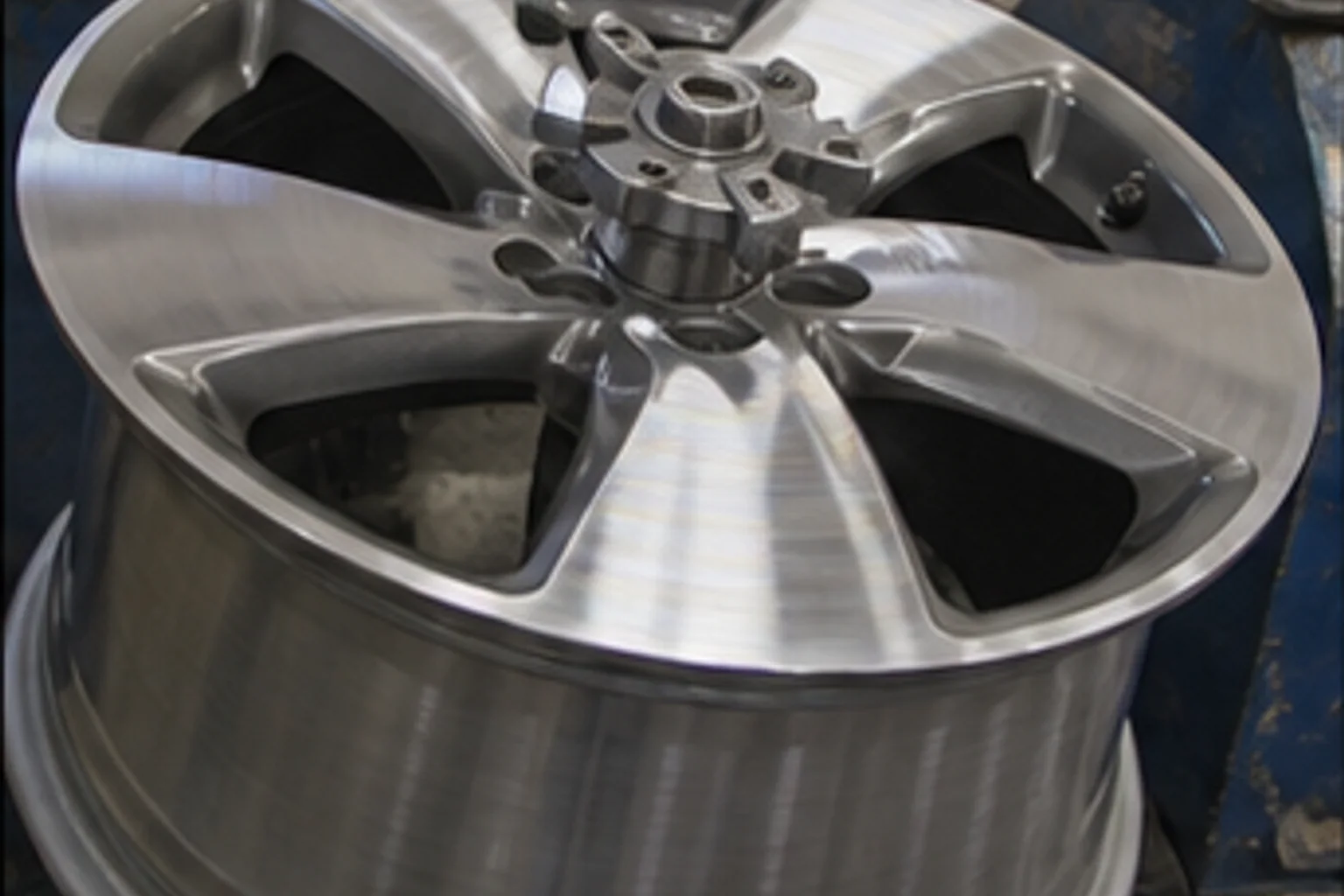
Machined and diamond-cut wheels have a lathe-turned face with a distinctive, bright, polished finish and visible cutting lines. When this finish is damaged, standard painting can't replicate it — the wheel must be re-cut on a CNC lathe and re-lacquered. We assess whether a damaged wheel can be re-cut to spec or whether a conventional refinish is the appropriate alternative, based on remaining material depth.

  • Requires CNC lathe re-cutting, not painting
  • Assessed for remaining material depth first
  • Peeling clear coat and fading also refinishable
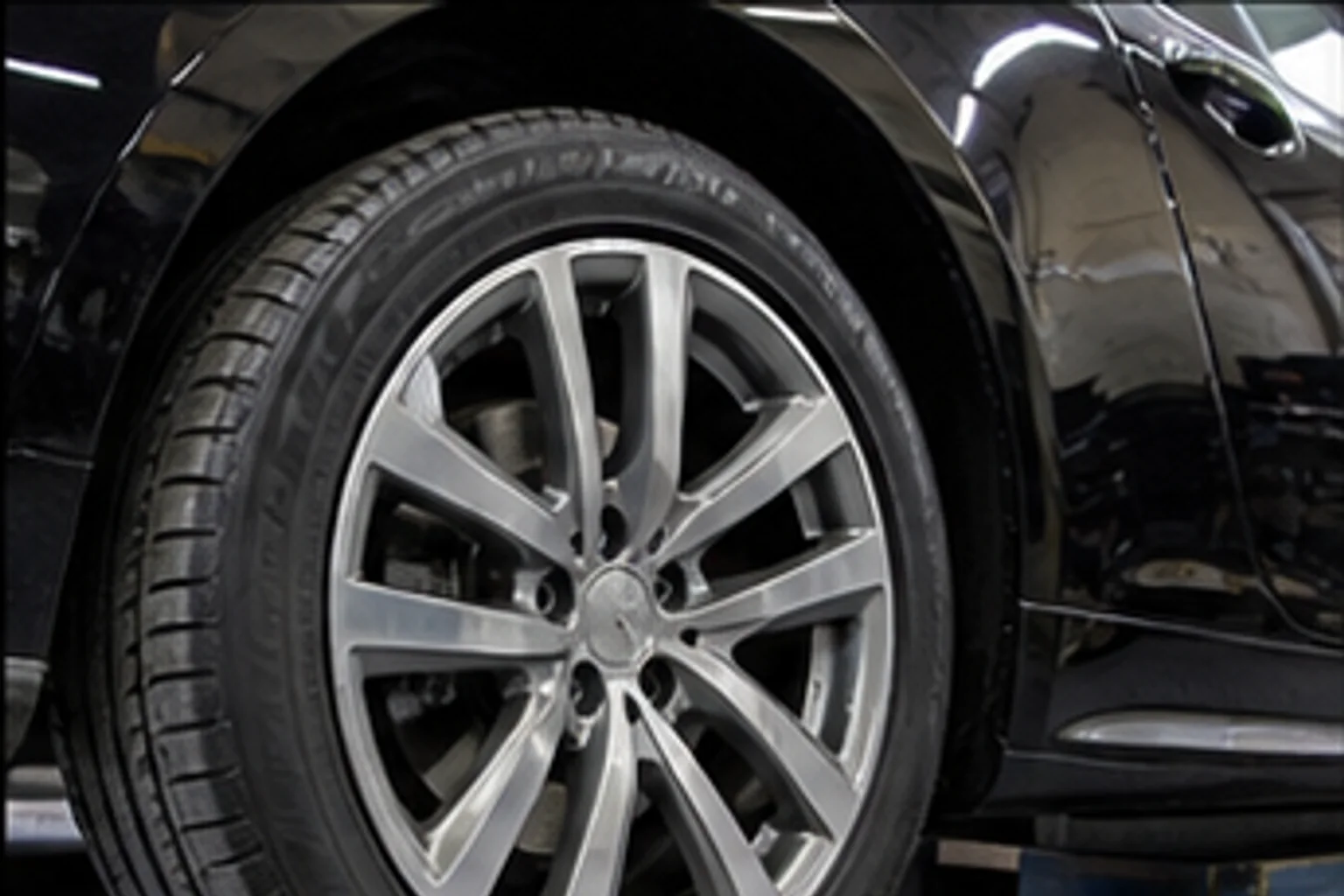
Cured and remounted wheel

Rim refinishing at a glance

Single-color refinish
$150–$300 per wheel
Custom or two-tone finish
$200–$400 per wheel
Set of four (standard finish)
$500–$1,000
Single wheel
1–2 days
Full set of four
3–5 business days
Get a rim refinishing quote

What it covers

What's included in a refinishing job

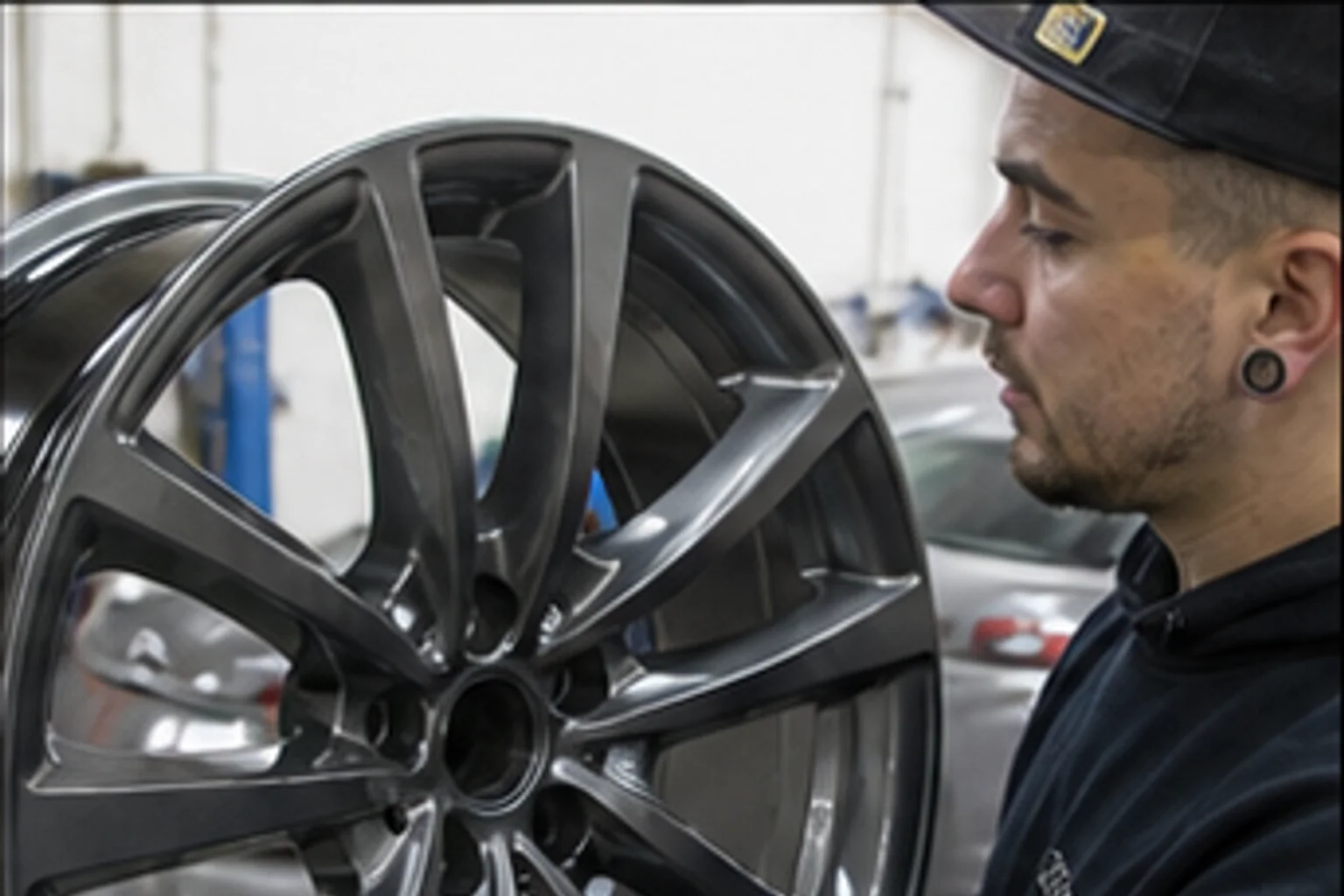
Every wheel is cured and inspected under lighting before it goes back on the vehicle.

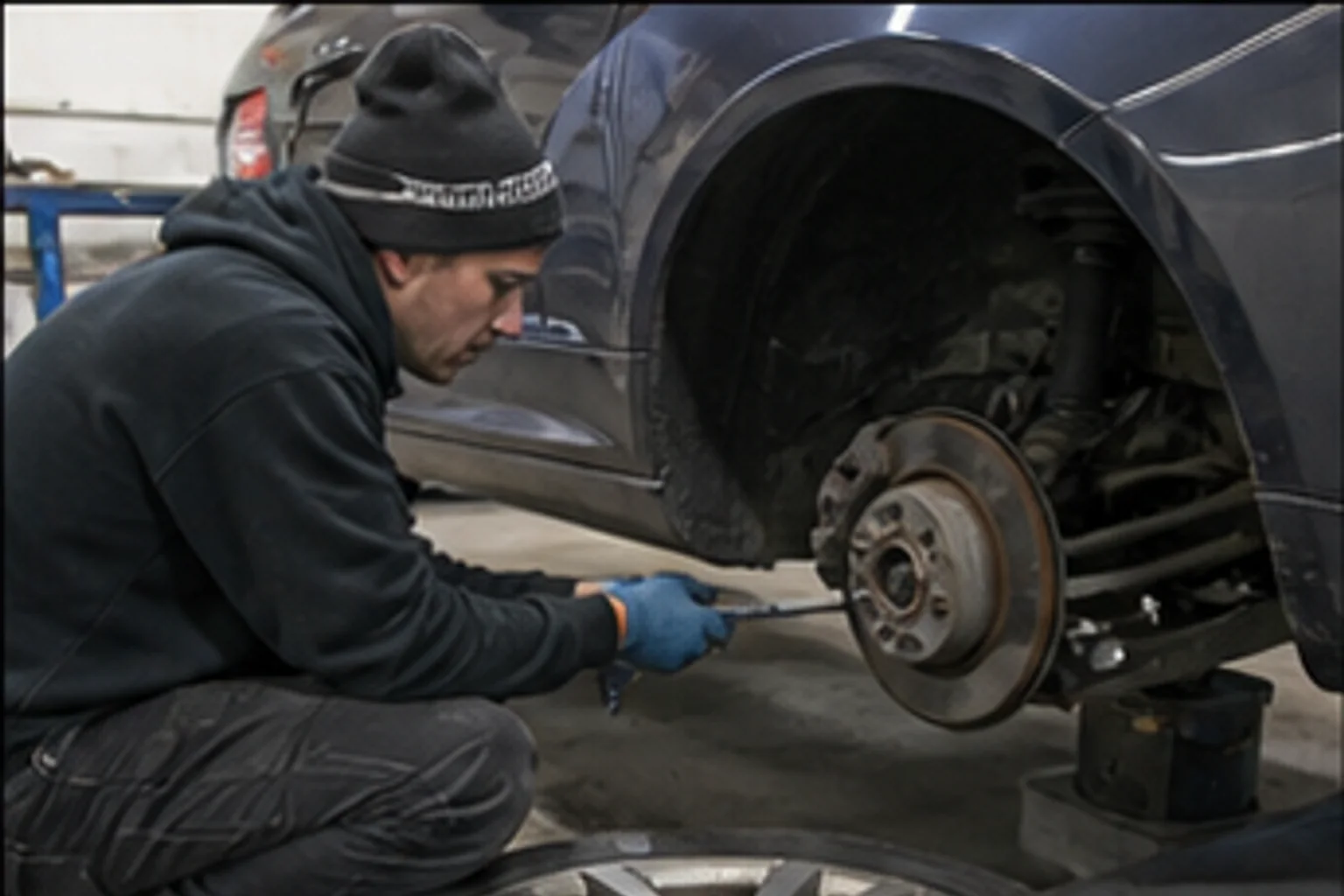
Wheel removal and assessment

Wheel Removal and Assessment

We remove the wheel and inspect the full surface under directional lighting. Every scratch, scuff, corrosion spot and finish defect is documented — structural damage (bends, cracks, lateral runout) is flagged for wheel repair before refinishing begins.
Substrate treatment

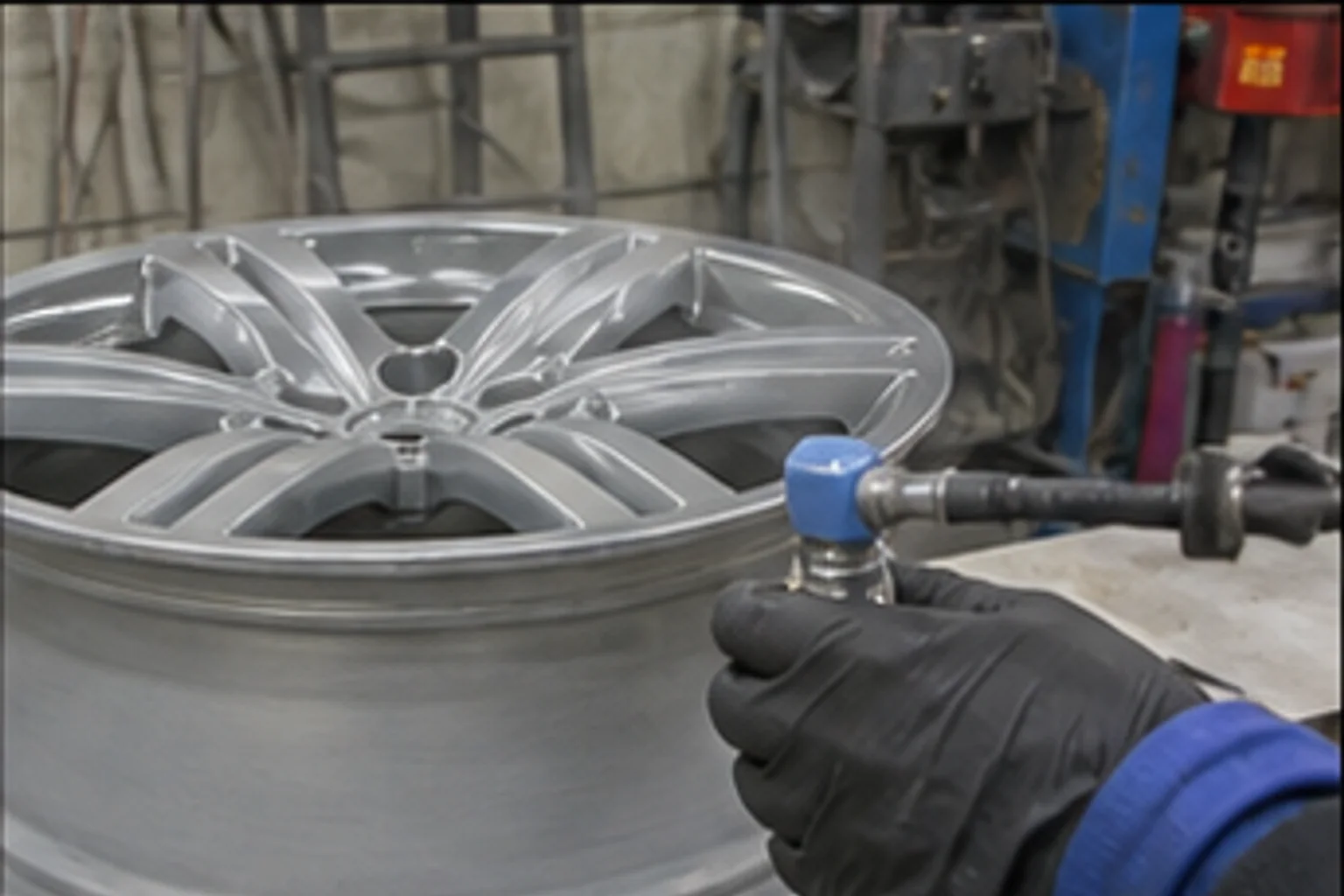
Substrate Treatment and Repair

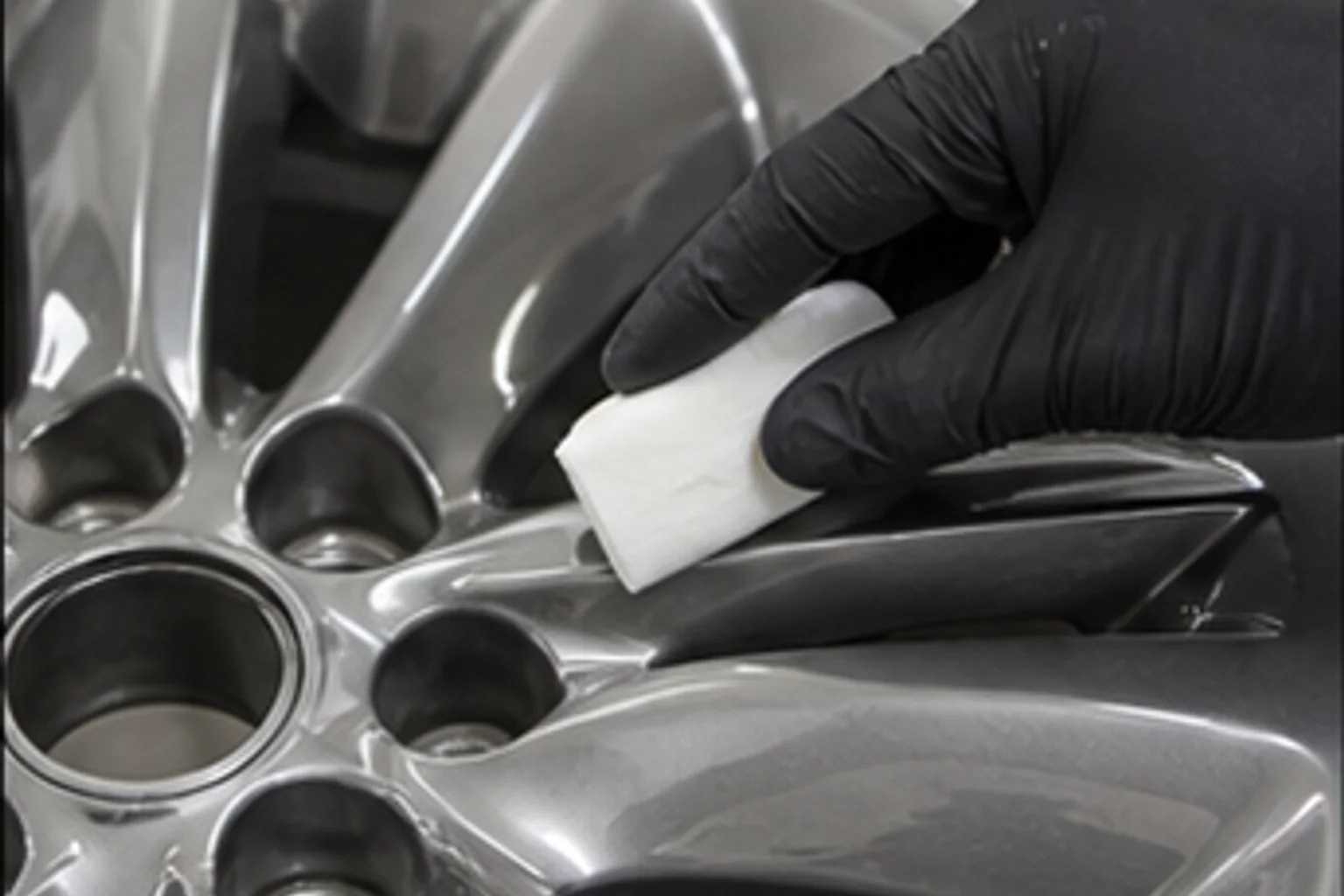
With the alloy bare, we address any surface corrosion, pitting or structural repairs identified during assessment. Curb rash not deep enough to require separate structural work is filled and sanded flush before primer is applied.

Primer and finish application

Primer and Finish Application

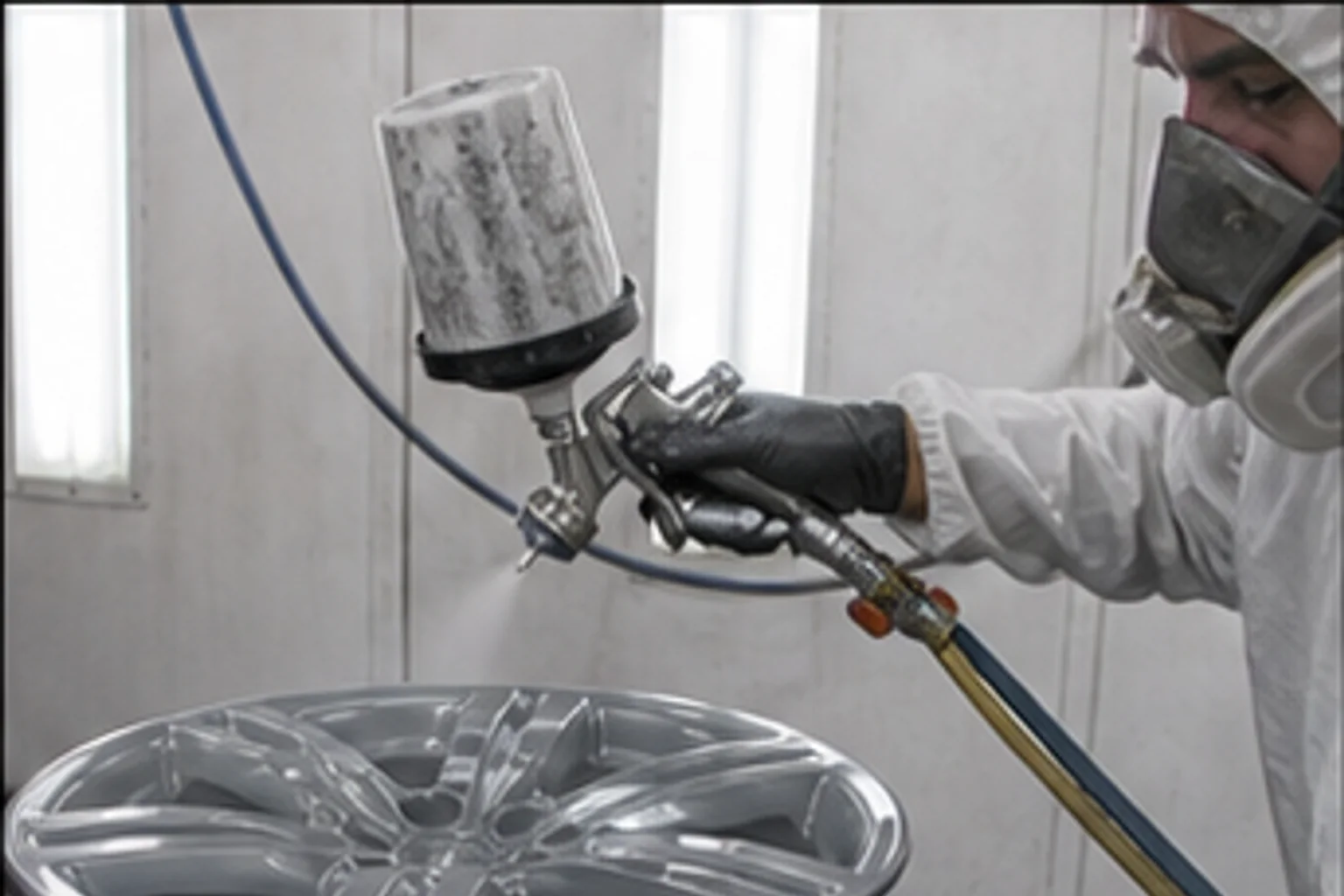
Automotive etch primer establishes adhesion to the clean alloy. Base coat in the specified finish color goes on in multiple thin passes, then clear coat for protection, gloss and durability. Powder coat is available as an alternative to liquid paint for certain finish types.

Custom and factory color matching

Factory or Custom Color Matching

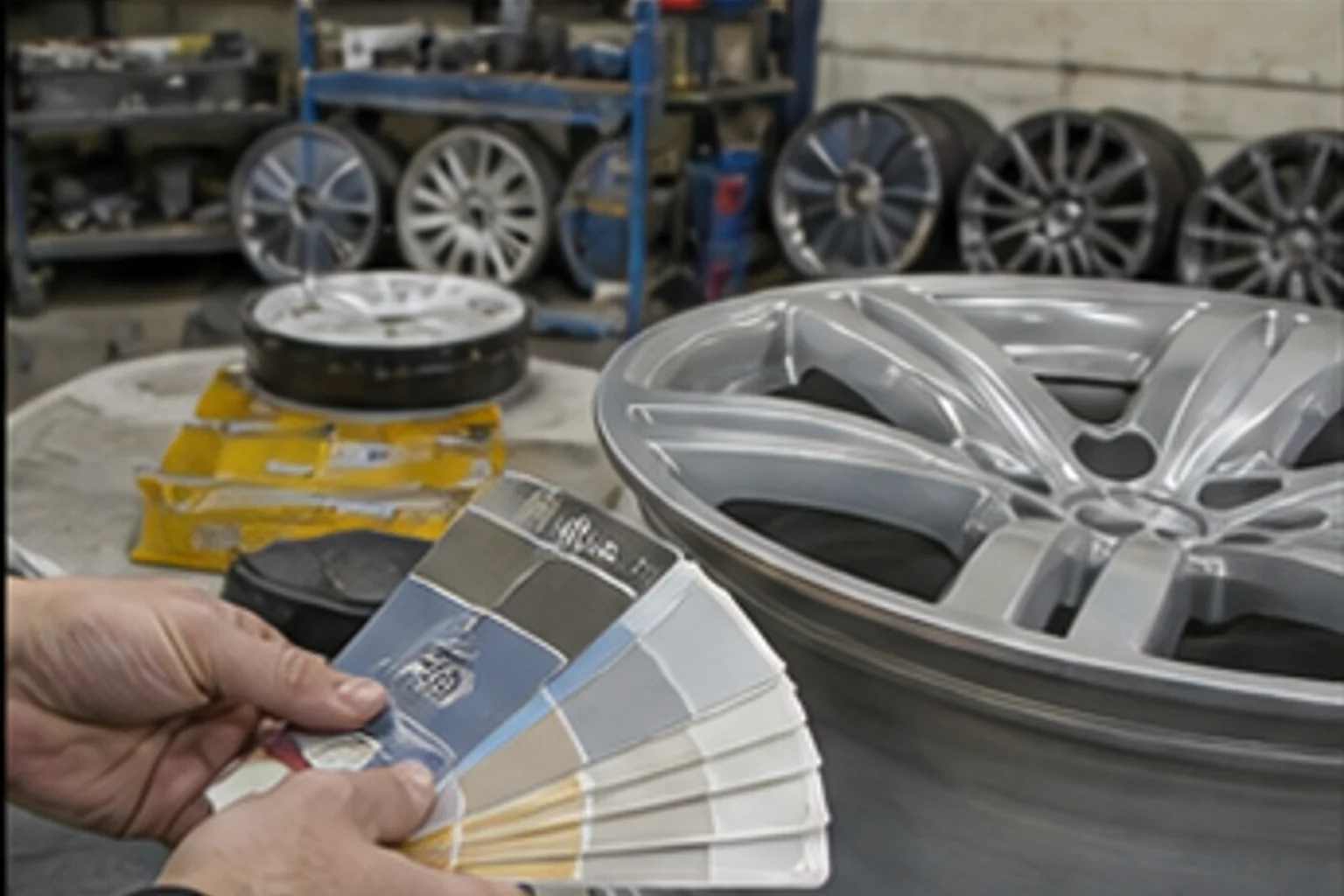
We refinish each wheel to match the factory color, or to a custom finish of your choice — solid colors, two-tone finishes and metallics are all available depending on the system used.

Ceramic wheel coating

Ceramic Wheel Coating (Optional)

For long-term finish protection, a ceramic coating can be applied to refinished wheels to resist brake dust adhesion, road salt corrosion and UV degradation.

Curb rash and scuffs

Contact with curbs, parking barriers and road edges grinds through the clear coat and base finish into the bare alloy. We sand, fill and refinish the damaged area to restore a smooth, consistent surface across the entire wheel face.

Corrosion and oxidation

Road salt, brake dust and moisture cause alloy wheels to corrode beneath the clear coat, appearing as bubbling, flaking or white powdery spots. Refinishing requires stripping the failed finish, treating the corroded alloy, and applying a new primer-based clear system.

Peeling or flaking clear coat

Factory clear coat breaks down from UV exposure, chemical exposure and heat cycling over time. Once it begins to peel, the underlying color coat is unprotected and deterioration accelerates. We strip the failed clear, prep the surface, and apply fresh clear coat or a full refinish as needed.

Faded or discolored finish

Wheels that have lost their original color depth from years of sun exposure, brake heat and chemical contact can be refinished to restore the factory appearance, or upgraded to a new color entirely.

Machined and diamond-cut wheel damage

Machined and diamond-cut wheels have a lathe-turned face that standard painting can't replicate. When damaged, the wheel must be re-cut on a CNC lathe and re-lacquered — we assess whether re-cutting to spec is possible based on remaining material depth.

How it works

Four stages, in this order

We do not rush the cure cycle — finish applied over an incompletely cured primer or base coat fails faster and peels at wheel edges under heat cycling.

  1. Wheel removal and assessment

    We remove the wheel from the vehicle and inspect the full surface under directional lighting. Every scratch, scuff, corrosion spot and finish defect is documented. If we find structural damage — bends, cracks or lateral runout — we flag it for wheel repair before refinishing begins.
  2. Substrate treatment and repair

    With the alloy bare, we address any surface corrosion, pitting or structural repairs identified during the initial assessment. Curb rash that wasn't deep enough to require separate structural work is filled and sanded flush at this stage, before primer is applied.

  3. Primer and finish application

    An automotive etch primer is applied to the clean alloy to establish adhesion. Base coat in the specified finish color goes on in multiple thin passes, and clear coat is applied over the base for protection, gloss level and durability. Powder coat is available as an alternative to liquid paint for certain finish types.

  4. Cure, inspection and remount

    Finished wheels are cured and inspected under lighting before remounting. We verify color consistency, finish texture and edge coverage before the wheel goes back on the vehicle. A ceramic coating can be applied afterward for long-term finish protection.

Technician inspecting repair work inside the Invisible Touch collision bay

Why this shop

Structural issues caught before refinishing

Every wheel is inspected under directional lighting first — if we find bends, cracks or lateral runout, we flag it for wheel repair before any refinishing begins, so you're not paying to refinish a wheel that isn't safe.

Liquid paint or powder coat, whichever fits the finish

Powder coat produces an extremely hard, chip-resistant finish, excellent for solid colors like gloss and satin black. Liquid paint gives more flexibility in color matching, metallics and multi-stage effects. We advise on the correct system during consultation.

No rushed cure cycles

Finish applied over an incompletely cured primer or base coat fails faster and peels at wheel edges under heat cycling — we provide a timeline at booking and call when the wheels are actually ready.

Machined and diamond-cut capability

Damaged machined and diamond-cut wheels need CNC lathe re-cutting, not conventional painting — we assess remaining material depth and confirm the correct process during assessment.

TownDrive to shop

Free wheel assessment and refinishing quote — call (781) 271-9110.

How much does rim refinishing cost?

Rim refinishing costs $150–$300 per wheel for a standard alloy in a single-color finish, and $200–$400 per wheel for custom colors, two-tone finishes, or wheels requiring significant substrate repair. A full set of four refinished together is priced at a per-wheel discount, typically $500–$1,000 for a set in a standard finish. Chrome refinishing or de-chroming is priced higher due to additional stripping and prep.

How long does rim refinishing take?

A single wheel takes 1–2 days. A full set of four typically takes 3–5 business days to allow for complete stripping, preparation, finish application and cure time between stages. We don't rush the cure cycle — finish applied over an incompletely cured primer or base coat fails faster and peels at wheel edges under heat cycling.

Powder coat or liquid paint — which is better?

Both produce durable, quality results — the right choice depends on the finish type and intended use. Powder coat is applied electrostatically and cured in an oven, producing an extremely hard, chip-resistant finish, particularly good for gloss and satin black. Liquid paint gives more flexibility in color matching, metallic finishes and multi-stage effects. We advise on the correct system during consultation.

Is refinishing worth it before selling my car?

Yes — wheel condition is one of the first visual assessments a buyer makes, and damaged or corroded wheels lower perceived vehicle value disproportionate to their actual repair cost. Refinishing a set of wheels for $600–$900 can improve appraisal or private sale price by $1,000–$2,000 on a well-maintained vehicle where the wheels are the primary visual detractor.

Can any wheel be refinished?

Most alloy and steel wheels with cosmetic damage can be refinished, but wheels with structural damage must be repaired before refinishing, or replaced if the damage is beyond repair. Cracks through the barrel or spoke, severe bends that have deformed the mounting surface, and wheels that have lost material from repeated curb impacts may not be refinishing candidates. Machined and diamond-cut wheels can be refinished but require lathe re-cutting rather than conventional painting.

Get your vehicle back to factory finish

Free estimates · All major insurers · Bedford, MA since 2005

Damage on your vehicle? Get a free estimate. All major insurers · Phones answered 24/7
(781) 271-9110 Free estimate